-
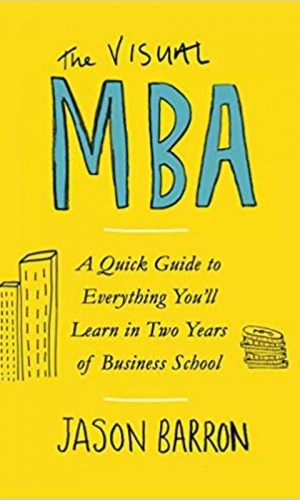
The Visual MBA
Jason Barron spent 516 hours in class, completed mountains of homework and shelled out tens of thousands of dollars to complete his MBA at the BYU Marriott School of Business. Along the way, rather than taking boring notes that he would never read (nor use) again, Jason created sketch notes for each class—visually capturing the essential points of his education—and providing an engaging and invaluable resource.
Once finished with his MBA, Jason launched a widely successful Kickstarter campaign distilling these same notes into a self-published book to help aspiring business leaders of all backgrounds and income levels understand the critical concepts one learns in business school.
₦27,900 -
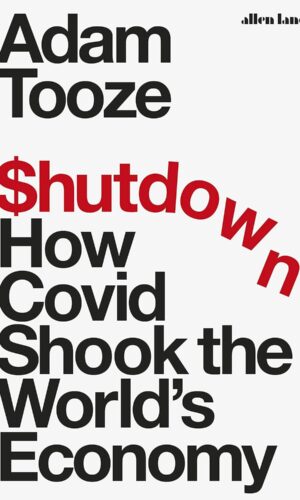
SHUTDOWN
Flights were grounded; supply chains broken; industries from tourism to oil to hospitality collapsed overnight, leaving hundreds of millions of people unemployed. Central banks responded with unprecedented interventions, just to keep their economies on life-support. For the first time since the second world war, the entire global economic system contracted.This book tells the story of that shutdown. We do not yet know how this story ends, or what new world we will find on the other side. In this fast-paced, compelling and at times shocking analysis, Adam Tooze surveys the wreckage, and looks at where we might be headed next.
₦27,800 -
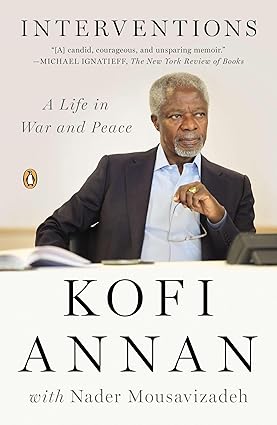
INTERVENTIONS – KOFI ANNAN
Written with eloquence and unprecedented candor, Interventions is the story of Kofi Annan’s remarkable time at the center of the world stage. After forty years of service at the United Nations, Annan—who received the Nobel Peace Prize in 2001—shares his unique experiences during the terrorist attacks of September 11; the American invasions of Iraq and Afghanistan; the war between Israel, Hizbollah, and Lebanon; the brutal conflicts of Somalia, Rwanda, and Bosnia; and the geopolitical transformations following the end of the Cold War. A personal biography of global statecraft, Interventions is as much a memoir as a guide to world order—past, present, and future.
₦27,800 -

-
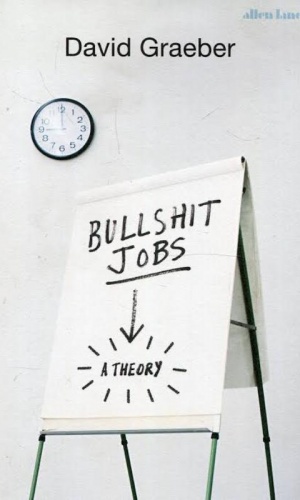
Bullshit Jobs
From bestselling writer David Graeber, a powerful argument against the rise of meaningless, unfulfilling jobs, and their consequences.
Does your job make a meaningful contribution to the world? In the spring of 2013, David Graeber asked this question in a playful, provocative essay titled “On the Phenomenon of Bullshit Jobs.” It went viral. After a million online views in seventeen different languages, people all over the world are still debating the answer.
There are millions of people—HR consultants, communication coordinators, telemarketing researchers, corporate lawyers—whose jobs are useless, and, tragically, they know it. These people are caught in bullshit jobs.
Graeber explores one of society’s most vexing and deeply felt concerns, indicting among other villains a particular strain of finance capitalism that betrays ideals shared by thinkers ranging from Keynes to Lincoln.
₦27,800 -
THE PLANT PARADOX
The Plant Paradox is arevolutionary look at the hidden compounds in “healthy” foods like fruit, vegetables, and whole grains that are causing us to gain weight and develop chronic disease.
₦27,500 -
THE LONGEVITY PARADOX
In The Longevity Paradox, he maps out a new approach to aging well—one that is based on supporting the health of the “oldest” parts of us: the microorganisms that live within our bodies.
₦27,500 -
THE ENERGY PARADOX
In The Energy Paradox, Dr. Gundry expands upon his previous discussions of gut, microbiome, and mitochondrial health, linking immune malfunction to the mental and physical symptoms of fatigue—including exhaustion, brain fog, depression, anxiety, and low metabolism.
₦27,500 -
UNLOCKING THE KETO CODE
In Unlocking the Keto Code, Dr. Gundry reveals the biological mechanism that makes keto diets so successful: a cellular process known as “mitochondrial uncoupling
₦27,500 -

ARTEMIS FOWL THE GRAPHIC NOVEL- NEW COVER
Twelve-year-old criminal mastermind Artemis Fowl has discovered a world below ground of armed and dangerous–and extremely high-tech–fairies.
He kidnaps one of them, Holly Short, and holds her for ransom in an effort to restore his family’s fortune.
But he may have underestimated the fairies’ powers. Is he about to trigger a cross-species war?₦26,700 -
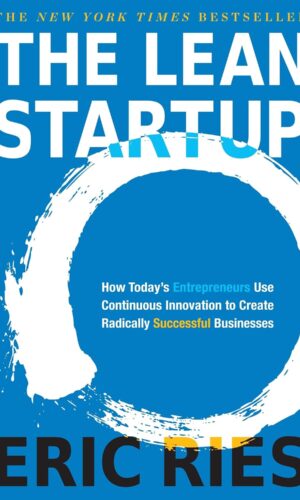
THE LEAN STARTUP
Eric Ries defines a startup as an organization dedicated to creating something new under conditions of extreme uncertainty. This is just as true for one person in a garage or a group of seasoned professionals in a Fortune 500 boardroom. What they have in common is a mission to penetrate that fog of uncertainty to discover a successful path to a sustainable business.
₦26,500 -
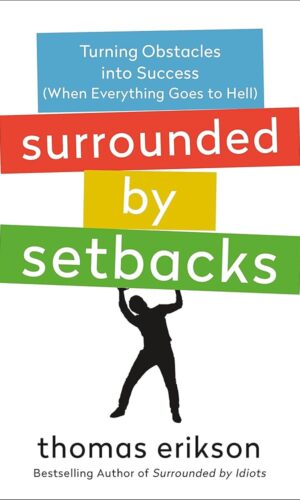
SURROUNDED BY SETBACKS
How to handle everything (and everyone) around you when all hell breaks loose, from the international bestselling author of Surrounded by Idiots .
Not everything goes the way we want it to – the world or people around us sometimes just spin out of control. Just consider the Covid pandemic for starters. Or how about that mad neighbour you have living next-door to you? Or when work seems to be going down the toilet when the competition keep outsmarting you? So how do you handle everything life throws your way when you’d really prefer to tell everyone to get stuffed?
₦25,400 -
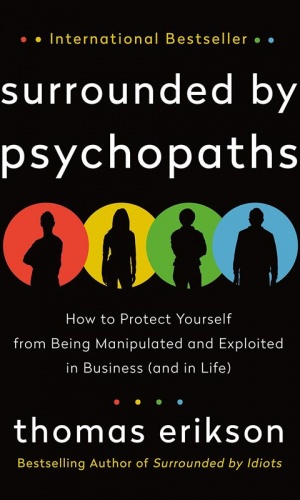
Surrounded by Psychopaths
Charming, charismatic, and delightful or manipulative, self-serving, and cunning? Psychopaths are both and that’s exactly what makes them dangerous. Bestselling author of the international phenomenon Surrounded by Idiots, Thomas Erikson reveals how to identify the psychopaths in your life and combat their efforts to control and manipulate.
Using the same simple four-color system of behavior classification that made Surrounded by Idiots so popular, Surrounded by Psychopaths teaches readers how to deal with psychopaths in their lives by becoming aware of their own behavior and their weaknesses. Vivid example stories illustrate ways that psychopaths can take advantage of various behavior types, helping readers identify their own weaknesses and be proactive about protecting themselves. Erikson outlines some of the most common forms of manipulation used by psychopaths―and others―to influence those around them. Since manipulation can often be a feature of ordinary, non-psychopathic relationships, the book also includes practical methods and techniques to help readers confront controlling people and rehabilitate negative relationships into mutually respectful ones.
₦25,400 -
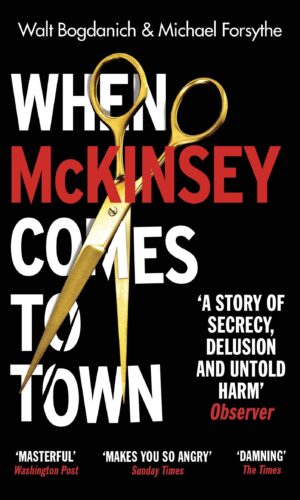
WHEN MCKINSEY COMES TO TOWN
McKinsey has escaped public scrutiny despite its role in advising tobacco and vaping companies, purveyors of opioids, repressive governments, and oil companies. McKinsey helped insurance companies’ boost their profits by making it incredibly difficult for accident victims to get payments; worked its U.S. government contacts to let Wall Street firms evade scrutiny; enabled corruption in developing countries such as South Africa; undermined health-care programs in states across the country. And much more.
₦25,000 -
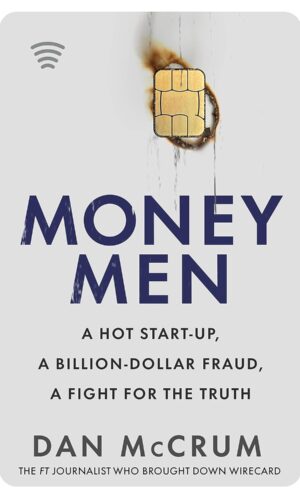
MONEY MEN
Money Men is the astonishing inside story of Wirecard’s multi-billion-dollar fraud, Europe’s biggest new tech darling revealed as a house of cards. Uncovering fake bank accounts, fake offices and possibly even a fake death, McCrum offers a searing exposé that will finally lay bare the truth.
₦25,000 -
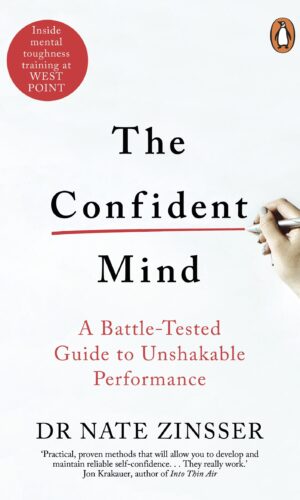
THE CONFIDENT MIND
Dr. Zinsser distills his research and years of experience, offering a fascinating guide to the science of confidence and providing readers with a practical, step-by-step program to best harness their belief in themselves to achieve success in any field. The Confident Mind is a complete guide to confidence: how to understand it, how to build it, how to protect it, and how to rely upon it when your performance matters most.
₦25,000 -
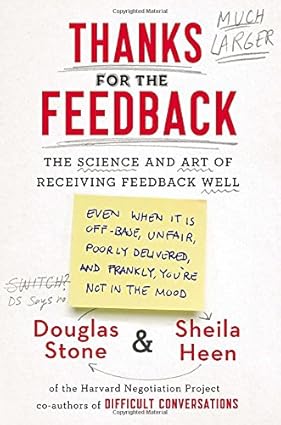
THANKS FOR THE FEEDBACK
Coauthors of the international bestseller Difficult Conversations, Stone and Heen have spent the last ten years working with businesses, nonprofits, governments, and families to determine what helps us learn and what gets in our way. With humor and clarity, they blend the latest insights from neuroscience and psychology with practical, hard-headed advice. The book is destined to become a classic in the world of leadership, organizational behavior, and education.
₦25,000 -

HOW ECONOMICS CAN SAVE THE WORLD
Our world is in a mess. The challenges of climate change, inequality, hunger and a global pandemic mean our way of life seems more imperilled and society more divided than ever; but economics can help! From parenting to organ donation, housing to anti-social behaviour, economics provides the tools we need to fix the biggest issues of today. Far from being a means to predict the stock market, enrich the elite or track money around the globe, economics provides a lens through which we can better understand how things work, design clever solutions and create the conditions in which we can all flourish. With a healthy dose of optimism, and packed with stories of economics in everyday situations, Erik Angner demonstrates the methods he and his fellow economists use to help improve the lives of people and the society in which they live. He shows us that economics can be a powerful force for good, awakening the possibility of a happier, more just and more sustainable world.
₦25,000 -
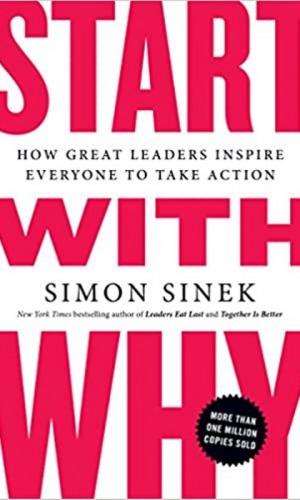
Start With Why
In 2009, Simon Sinek started a movement to help people become more inspired at work, and in turn inspire their colleagues and customers. Since then, millions have been touched by the power of his ideas, including more than 28 million who’ve watched his TED Talk based on START WITH WHY — the third most popular TED video of all time.
Sinek starts with a fundamental question: Why are some people and organizations more innovative, more influential, and more profitable than others? Why do some command greater loyalty from customers and employees alike? Even among the successful, why are so few able to repeat their success over and over?
People like Martin Luther King Jr., Steve Jobs, and the Wright Brothers had little in common, but they all started with WHY. They realized that people won’t truly buy into a product, service, movement, or idea until they understand the WHY behind it.
₦25,000 -
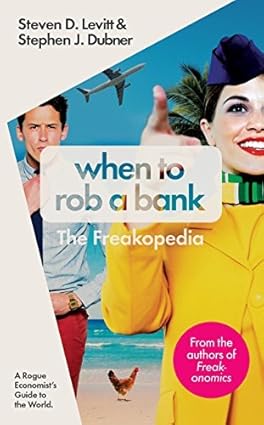
WHEN TO ROB A BANK
When to Rob a Bank, they ask a host of typically off-center questions: Why don’t flight attendants get tipped? If you were a terrorist, how would you attack? And why does KFC always run out of fried chicken?
Over the past decade, Steven D. Levitt and Stephen J. Dubner have published more than 8,000 blog posts on the Freakonomics website. Many of them, they freely admit, were rubbish. But now they’ve gone through and picked the best of the best. You’ll discover what people lie about, and why; the best way to cut gun deaths; why it might be time for a sex tax; and, yes, when to rob a bank. (Short answer: never; the ROI is terrible.) You’ll also learn a great deal about Levitt and Dubner’s own quirks and passions, from gambling and golf to backgammon and the abolition of the penny.
₦24,700 -
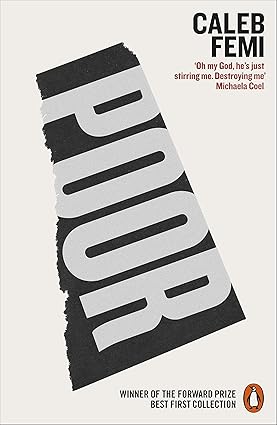
POOR
What is it like to grow up in a place where the same police officer who told your primary school class they were special stops and searches you at 13 because ”you fit the description of a man” – and where it is possible to walk two and a half miles through an estate of 1,444 homes without ever touching the ground?
₦24,700 -
BOOMERANG
Michael Lewis’s investigation of bubbles beyond our shores is so brilliantly, sadly hilarious that it leads the American reader to a comfortable complacency: oh, those foolish foreigners. But when he turns a merciless eye on California and Washington, DC, we see that the narrative is a trap baited with humor, and we understand the reckoning that awaits the greatest and greediest of debtor nation
₦24,700 -
WORLD ORDER
To answer these questions Henry Kissinger draws upon a lifetime’s historical study and unmatched experience as a world statesman. His account is shot through with observations about how historical change takes place, how some leaders shape their times and others fail to do so, and how far states can stray from the ideas which define them. World Order is a masterpiece of narrative, analysis and portraits of great historical actors that only Henry Kissinger could have written.
₦24,700 -
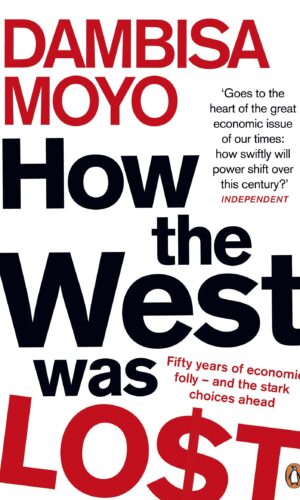
HOW THE WEST WAS LOST
In How the West Was Lost, the New York Times bestselling author Dambisa Moyo offers a bold account of the decline of the West’s economic supremacy. She examines how the West’s flawed financial decisions have resulted in an economic and geopolitical seesaw that is now poised to tip in favor of the emerging world, especially China.
₦24,700